We may earn a commission when you buy through links on this page, at no extra cost to you; see our Affiliate Disclosure.
Razor burn is a common side effect of shaving: stinging, redness and itching that show up within minutes and usually fade within hours to a few days.[1] This guide covers both sides of it. A good shaving cream or gel helps prevent razor burn by letting the blade glide, while a cool compress and a fragrance-free moisturizer help soothe it afterwards.[1]
Key Specs Compared
Numbers match the reviews below (tap to jump).
| # | Form | Size | Scent | Key ingredients | Skin type (stated) |
|---|---|---|---|---|---|
| 1 | Cream | 6 oz | Fragrance-free | Glycerin, Panthenol | Sensitive |
| 2 | Gel | 7 oz | Fragrance-free | Oat, Vitamin E | Dry, normal |
| 3 | Cream | 4.2 oz | Fragrance-free | Glycerin, Petrolatum | Dry |
– not stated in the listing · Specs as stated by the maker; check the label before you buy · Not a treatment for any skin condition
Shaving and your skin
- Shave after a warm shower or a warm compress, use a shaving cream or gel, and shave in the direction the hair grows.[2]
- Razor burn is irritation that shows up within minutes of shaving; razor bumps form later, when shaved hairs curl back into the skin.[1][3]
- Razor bumps and ingrown hairs come from hairs curling back into the skin; shaving less closely and replacing blades after 5 to 7 shaves can help.[4][3]
- See a dermatologist for bumps that are painful, infected, keep coming back or leave dark marks.[5]
- Tea tree oil can irritate skin and cause allergic reactions in some people.[6]
This guide is general information, not medical advice.
Our Picks: Creams for Razor Burn
In our October 2026 review, all six previous picks failed our check (no fragrance, essential oils, menthol or harsh preservatives), so we removed them:- Pacific Shaving Company Natural Shaving Oil – It lists bergamot, tangerine and grapefruit peel oils plus menthol.[7]
- MARLOWE No. 141 Shave Cream – Marlowe describes it as lightly scented, and the ingredient list includes fragrance (parfum).[8]
- Lather & Wood Sandalwood After-Shave Balm – The “sandalwood” comes from sandalwood oil plus a fragrance oil, and the list also includes alcohol.[9] Fragrance ingredients can trigger allergic reactions.[10]
- Cremo Original Shave Cream – The ingredient list includes fragrance.[11]
- Cremo Coconut Mango Shave Cream – The ingredient list includes fragrance and rosemary leaf extract.[12]
- Pacific Shaving Company Natural Shaving Cream – It is not scent-free. The list includes orange, grapefruit, lemon, mandarin and bergamot oils.[13]
1
Vanicream® Shave Cream Fragrance-Free Cream for Sensitive Skin


Currently unavailable
- Vanicream made this non-lathering cream for easily irritated, sensitive skin.[14]
- It has no fragrance, essential oils or botanical extracts, and the maker labels it alcohol-free, non-comedogenic and oil-free.[14]
- Glycerin and panthenol are among the listed ingredients.[14]
- Spread a thin layer on wet skin and rinse the razor often so it doesn’t clog.[14]
2
Aveeno® Therapeutic Shave Gel Fragrance-Free Oat Gel for Dry Skin


Currently unavailable
- Aveeno labels this gel fragrance free and allergy tested, and says it contains no soap.[15]
- Oat flour is the featured ingredient, and the maker aims it at normal to dry skin.[15]
- It turns from gel to lather as you rub it over wet skin.[15]
- It comes in a pressurized can, so if you prefer to avoid canned products, Vanicream is the simpler pick.[15]
3
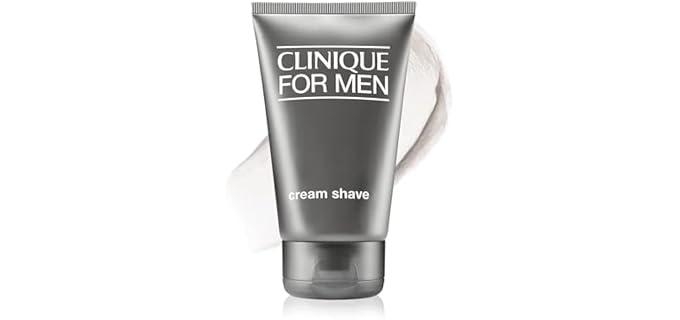
Clinique For Men® Cream Shave Fragrance-Free Lathering Cream for Dry Skin


Currently unavailable
- Clinique lists this lathering cream as fragrance free, allergy tested and dermatologist tested.[16]
- It is preserved with chlorphenesin and phenoxyethanol, with no menthol, essential oils or formaldehyde releasers listed.[16]
- Glycerin and petrolatum sit high on the list, and the maker aims it at dry to very dry skin.[16]
- It comes in a tube, and a small amount worked into a lather covers one shave.
Razor Burns: Symptoms and Causes
- Appearance – Razor burn looks like a blotchy or streaky red rash that can burn, sting, itch or feel tender. It usually appears a few minutes after shaving.[1] Small, pimple-like bumps that appear later are more likely razor bumps, caused by hairs curling back into the skin.[1][3]
- Causes – Dry shaving, shaving too fast, a dull blade, shaving against the grain and irritating products can all cause razor burn.[1] If you have eczema, try our shaving cream for eczema guide.
Prevention of Razor Burns
- Soften First – Shave after a warm shower and always use a shaving cream or gel.[2]
- Shave with the Grain – Shave in the direction the hair grows, rinsing the blade after each swipe.[2]
- Use a Sharp Blade – Replace disposable razors or blades after 5 to 7 shaves and store them somewhere dry.[4]
- Use Light, Short Strokes – Don’t rush, and avoid going over the same area again and again.[1]
- Choose Gentle Products – Skip pre- and post-shave products with fragrance or alcohol.[1]
Treatment of Razor Burn at Home
- Cool Compress – Hold a cool, damp washcloth on the area to calm heat and stinging.[1]
- Fragrance-Free Moisturizer – Apply a moisturizing lotion afterwards and avoid products with fragrance, alcohol or other irritants.[1]
- Colloidal Oatmeal – The FDA lists colloidal oatmeal as an approved skin protectant ingredient in over-the-counter products[17], and an oatmeal bath can help soothe irritated skin.[1]
- Hydrocortisone Cream – Over-the-counter hydrocortisone can calm stubborn irritation.[1] Use it only short term: no more than 7 days unless a doctor or pharmacist says otherwise, and don’t use it on your face or genitals without asking first, since it can damage the skin there.[18]
- Let It Heal – Don’t shave the area again until it clears. If it hasn’t improved in a few days or looks infected, see your healthcare provider.[1]
Index Table: Top-Rated Creams for Razor Burn
| No. | Product | Image | Features | Brand |
|---|---|---|---|---|
| 1 | Vanicream Shave Cream - Fragrance-Free Cream for Sensitive Skin |  | Vanicream | |
| 2 | Aveeno Therapeutic Shave Gel - Fragrance-Free Oat Gel for Dry Skin |  | Aveeno | |
| 3 | Clinique For Men Cream Shave - Fragrance-Free Lathering Cream for Dry Skin |  | Clinique For Men |
Sources
- Cleveland Clinic. Razor Burn: Causes & Treatment. Accessed October 17, 2026.
- American Academy of Dermatology. Hair removal: How to shave. Accessed October 17, 2026.
- Cleveland Clinic. Ingrown Hair. Accessed October 17, 2026.
- American Academy of Dermatology. 6 razor bump prevention tips from dermatologists. Accessed October 17, 2026.
- American Academy of Dermatology. Acne-like breakouts could be folliculitis. Accessed October 17, 2026.
- NCCIH (NIH). Tea Tree Oil. Accessed October 17, 2026.
- Pacific Shaving Company. Natural Shaving Oil (ingredients). Accessed October 17, 2026.
- The Razor Company. Marlowe No. 141 Conditioning Shave Cream (ingredients). Accessed October 17, 2026.
- Inkeedecoder. Lather & Wood After-Shave Balm (published ingredient list). Accessed October 17, 2026.
- U.S. Food and Drug Administration. Fragrances in Cosmetics. Accessed October 17, 2026.
- Cremo. Original Shave Cream (ingredients). Accessed October 17, 2026.
- Cremo. Coconut Mango Shave Cream (ingredients). Accessed October 17, 2026.
- Pacific Shaving Company. Natural Shaving Cream (ingredients). Accessed October 17, 2026.
- Vanicream. Vanicream Shave Cream (ingredients and product claims). Accessed October 17, 2026.
- Aveeno. Therapeutic Shave Gel with Oat for Dry Skin. Accessed October 17, 2026.
- Clinique. Clinique For Men Cream Shave (ingredients). Accessed October 17, 2026.
- U.S. Code of Federal Regulations. 21 CFR 347.10: Skin protectant active ingredients. Accessed October 17, 2026.
- NHS. Hydrocortisone for skin. Accessed October 17, 2026.
Update History
- Oct 2026: Removed Pacific Shaving Company Natural Shaving Oil (bergamot, tangerine and grapefruit oils plus menthol), MARLOWE No. 141 Shave Cream (fragrance), Lather & Wood Sandalwood After-Shave Balm (sandalwood oil and fragrance oil), Cremo Original and Cremo Coconut Mango Shave Creams (fragrance) and Pacific Shaving Company Natural Shaving Cream (citrus essential oils); added Vanicream Shave Cream, Aveeno Therapeutic Shave Gel and Clinique For Men Cream Shave; clarified that shave creams help prevent razor burn while fragrance-free moisturizers soothe it; removed the baking soda and coconut oil tips; added cited guidance on colloidal oatmeal and short-term hydrocortisone use; added a Key Specs table; updated Sources (AAD, Cleveland Clinic, FDA, NHS)
- Oct 2026: Product picks reviewed and updated; added Sources (AAD, Cleveland Clinic, NIH NCCIH)
- Jul 2021: Added Cremo Barber Grade Original Shave Cream and Cremo Coconut Mango Moisturizing Shave Cream
- Feb 2020: First published


