We may earn a commission when you buy through links on this page, at no extra cost to you; see our Affiliate Disclosure.
Shaving creams are a great way for people suffering from eczema to combine grooming needs with skin sensitivity. So we looked for shaving creams that skip the ingredients most likely to bother eczema-prone skin. We will highlight additional points to help you have a comfortable and soothing shaving experience. Below you’ll find what to look for on a label and the 3 products that passed our ingredient check.
Key Specs Compared
Numbers match the reviews below (tap to jump).
| # | Form | Size | Scent | Key ingredients | Skin type (stated) |
|---|---|---|---|---|---|
| 1 | Cream | 6 oz | Fragrance-free | Glycerin, Panthenol | Sensitive |
| 2 | Gel | 7 oz | Fragrance-free | Oat, Vitamin E | Dry, normal |
| 3 | Cream | 4.2 oz | Fragrance-free | Glycerin, Petrolatum | Dry |
– not stated in the listing · Specs as stated by the maker; check the label before you buy · Not a treatment for any skin condition
Shaving with eczema
- Pick products labeled “fragrance free”; an “unscented” label can still hide a masking fragrance.[1][2]
- Skip shaving over cracked, oozing or bleeding patches and let a doctor look at them first.[3]
- No shaving cream treats eczema; see a doctor for flares that don’t improve.[4]
This guide is general information, not medical advice.
Things to Take Care of When Shaving Eczema Prone Skin
 Eczema leaves skin dry, itchy and easy to irritate, so a razor can sting and drag where it would normally glide. These habits help keep the shave gentle.
- Know What You’re Dealing With – Atopic dermatitis is not the only kind of eczema. Contact dermatitis is a separate type that flares where skin touches an irritant or an allergen, and fragrances and preservatives such as formaldehyde are common culprits.[5] People with atopic dermatitis are more prone to it because their skin barrier is weaker.[5] Razor bumps are different again: they form when freshly cut, curly hairs grow back into the skin.[6]
- Leave Flaring Skin Alone – Cracks in eczema skin can let in infection and make the rash worse.[3] Shave around broken or weeping patches, not over them, and ask a dermatologist about treatment; prescription creams and ointments applied to the skin are a common option.[3]
- Keep the Water Lukewarm – Wet your skin with lukewarm rather than hot water.[7] Keep the wash short too, since a long soak can leave skin drier.[1]
- Go Slowly and Don’t Stretch – Use light, unhurried strokes and avoid going over the same spot again and again. Pulling the skin taut while shaving can cause new razor bumps.[6]
- Shave With the Grain – Following the direction your hair grows helps prevent bumps and razor burn.[8]
- Keep the Blade Sharp and Clean – Rinse the razor after every stroke, let it dry between shaves, and swap the blade or disposable razor after 5 to 7 shaves.[8]
- Moisturize Afterward – Apply a fragrance-free cream or ointment once you’re done; well-hydrated skin holds up better.[1]
How to Choose the Right Shaving Creams if Suffering from Eczema?
Shaving already stresses irritated skin, so what’s in the product matters as much as technique. Keep these points in mind when comparing labels, or browse our wider shaving cream guide for general options.
- Fragrance Free, Not Just Unscented – Fragrance can set off an atopic dermatitis flare, and “unscented” may only mean a scent has been covered up.[1] Even some products sold as unscented contain fragrance ingredients added to mask other smells.[2] Look for the words “fragrance free” and read the full ingredient list.
- No Essential Oils or Menthol – Plant oils such as lavender, geranium or sandalwood, and cooling menthol, are scent ingredients too. “Natural” does not mean gentle for skin that reacts to fragrance.
- Watch the Preservatives – Formaldehyde is a known contact dermatitis trigger.[5] Some preservatives release small amounts of formaldehyde and can cause allergic reactions on their own; on a label, look for DMDM hydantoin, diazolidinyl urea, imidazolidinyl urea, quaternium-15 and bronopol (2-bromo-2-nitropropane-1,3-diol).[9]
- Creams Over Canned Foams – Many aerosol foams pair propellants with added fragrance, so a plain cream is usually the simpler choice. If a label says it suits sensitive skin, that’s a good start.[8]
- Patch-Test Anything New – Other ingredients besides fragrance can cause a flare, so try a new product on a small patch of skin for a few days before using it all over.[1]
- Recheck the Label on Each Purchase – Makers can change a formula without changing the product name, and some tell you to go by the list on the package you actually receive.[10] A quick look at each new tube or can catches a newly added fragrance or preservative.
Helpful Ingredients and Ones to Skip

- Glycerin – A humectant that draws water into the skin and helps the razor glide.
- Panthenol – A vitamin B5 form often added to soothe and condition skin.
- Simple, Short Lists – Fewer ingredients means fewer chances of hitting one that bothers you.
- Skip – Fragrance (parfum), essential oils, menthol and formaldehyde-releasing preservatives.[5][9]
How We Chose These Products
We research products using manufacturer information, ingredient lists, retailer listings and guidance from dermatology and health organizations. We do not test products in person. For this update we rejected any cream whose label lists fragrance, essential oils, menthol or a formaldehyde-releasing preservative. Read more in How We Research.Frequently Asked Questions (FAQ) Regarding Shaving Cream for Eczema
- Does removing body hair help with eczema? Not directly. Removing hair doesn’t treat eczema, and shaving over inflamed or cracked patches can irritate them further and raise the risk of infection.[3]
- What does shaving cream do to the skin? It keeps hairs wet and soft and puts a slippery layer between the blade and your skin, which cuts down on drag. It is a cosmetic, not an eczema treatment.[4]
Our Picks: Shaving Cream for Eczema
In our October 2026 review we removed five creams whose labels list fragrance, essential oils, menthol or a formaldehyde releaser. The 3 products below passed that ingredient check.1
Vanicream® Shave Cream Fragrance-Free Cream for Sensitive Skin


Currently unavailable
- Vanicream describes this as a non-lathering cream made for easily irritated, sensitive skin.[11]
- Its ingredient list has no fragrance, essential oils, botanical extracts or menthol, and the maker calls it alcohol-free.[11]
- Glycerin and panthenol are among the listed ingredients, and the preservatives are 1,2-hexanediol and caprylyl glycol rather than a formaldehyde releaser.[11]
- Spread a thin layer on wet skin and rinse the razor often so it doesn’t clog, as the directions suggest.[11]
2
Aveeno® Therapeutic Shave Gel Fragrance-Free Oat Gel for Dry Skin


Currently unavailable
- Aveeno labels this gel fragrance free and allergy tested, and says it contains no soap.[12]
- Oat flour is the featured ingredient, and the maker pitches it at normal to dry skin, which suits eczema’s tendency to dryness.[12]
- Rub a small amount over wet skin to build a lather before shaving, per the directions.[12]
- It comes in a pressurized can, so if you prefer to avoid canned products, Vanicream is the simpler pick.[12]
3
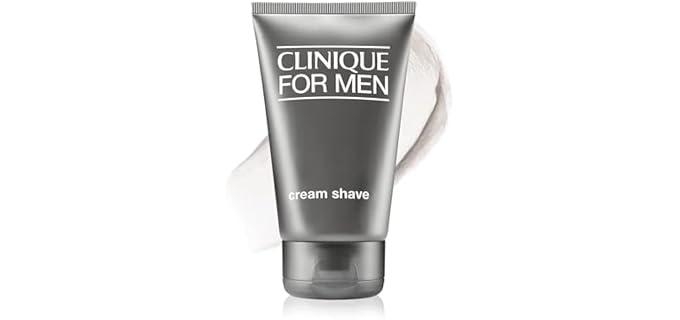
Clinique For Men® Cream Shave Fragrance-Free Lathering Cream for Dry Skin


Currently unavailable
- Clinique lists this lathering cream as fragrance free, allergy tested and dermatologist tested.[10]
- Glycerin and petrolatum sit high on the ingredient list, and the maker aims it at dry to very dry skin.[10]
- It is preserved with chlorphenesin and phenoxyethanol, with no formaldehyde releasers, menthol or essential oils listed.[10]
- It comes in a tube rather than a can, and a nickel-size amount worked between wet palms is enough for one shave.[10]
Index Table: Top-Rated Shaving Cream for Eczema
| No. | Product | Image | Features | Brand |
|---|---|---|---|---|
| 1 | Vanicream Shave Cream - Fragrance-Free Cream for Sensitive Skin |  | Vanicream | |
| 2 | Aveeno Therapeutic Shave Gel - Fragrance-Free Oat Gel for Dry Skin |  | Aveeno | |
| 3 | Clinique For Men Cream Shave - Fragrance-Free Lathering Cream for Dry Skin |  | Clinique For Men |
Sources
- American Academy of Dermatology. Atopic dermatitis skin care. Accessed October 17, 2026.
- U.S. Food and Drug Administration. Fragrances in Cosmetics. Accessed October 17, 2026.
- American Academy of Dermatology. Atopic dermatitis: Diagnosis and treatment. Accessed October 17, 2026.
- U.S. Food and Drug Administration. Is It a Cosmetic, a Drug, or Both? (Or Is It Soap?). Accessed October 17, 2026.
- National Eczema Association. Contact Dermatitis. Accessed October 17, 2026.
- American Academy of Dermatology. Razor bump remedies for men with darker skin tones. Accessed October 17, 2026.
- National Eczema Association. Bathing. Accessed October 17, 2026.
- American Academy of Dermatology. Hair removal: How to shave. Accessed October 17, 2026.
- de Groot A, Geier J, Flyvholm MA, et al. Contact allergy to and allergic contact dermatitis from formaldehyde and formaldehyde releasers: A clinical review and update. Contact Dermatitis. 2022. Accessed October 17, 2026.
- Clinique. Clinique For Men Cream Shave (ingredients). Accessed October 17, 2026.
- Vanicream. Vanicream Shave Cream (ingredients and directions). Accessed October 17, 2026.
- Aveeno. Therapeutic Shave Gel with Oat for Dry Skin. Accessed October 17, 2026.
Update History
- Oct 2026: Removed Proraso Sensitive Shaving Cream (contains fragrance), Viking Revolution Shaving Cream (contains DMDM hydantoin, a formaldehyde releaser; scented versions also list fragrance), Nivea MEN Sensitive Shave Foam (aerosol foam with fragrance), Rocky Mountain Barber Company Sandalwood Shaving Cream (contains fragrance, menthol and sandalwood oil) and Cremo Sensitive Shave Cream (contains lavender and geranium oils); added Vanicream Shave Cream; added Aveeno Therapeutic Shave Gel; added Clinique For Men Cream Shave; corrected the “chemical free” claim, the unscented/citrus contradiction and the foam recommendation that conflicted with our own advice; added guidance on contact dermatitis, flare patches, patch testing and preservatives; added shaving tips on water temperature, formaldehyde-releasing preservative names and rechecking ingredient labels; removed product scores; updated Sources (AAD, FDA, NEA)
- Oct 2026: Product picks reviewed and updated; added a Key Specs table; added Sources (AAD, FDA)
- Mar 2022: Added a product video
- Aug 2021: Added hands-on review photos
- Feb 2020: First published


