We may earn a commission when you buy through links on this page, at no extra cost to you; see our Affiliate Disclosure.
Sunscreen on a bald head at a glance
A bald scalp gets the same sun your face does, and it gets it for the whole time you are outside. The FDA lists an exposed scalp from balding or thinning hair among the spots people forget when they put on sunscreen.[1] This guide explains what the FDA and the American Academy of Dermatology say about sunscreen for a bald head, how to apply it, and six sunscreens that are in stock on the web US.- Choose a broad-spectrum sunscreen with an SPF of 30 or higher that is water resistant.[2][3]
- If your hair is thinning or gone, put sunscreen on your scalp or wear a wide-brimmed hat.[2]
- Apply it about 15 minutes before you go outside, and reapply at least every two hours and after swimming or sweating.[1][2]
- No sunscreen is waterproof. The FDA says all of them eventually wash off, and a water resistant label means 40 or 80 minutes in the water.[1]
- The FDA says SPF values up to 50 give greater sunburn protection, and the SPF number mainly reflects protection against UVB.[1]
- Sunscreen is one part of sun protection. Seek shade when the sun is strongest, from 10 a.m. to 2 p.m., and wear a hat and sunglasses with UV protection.[3]
Disclaimer: This article is general information, not medical advice. Sunscreen lowers the risk of sunburn but does not remove it. If you think your scalp has sun damage, a dermatologist can examine your skin.

Key Specs Compared
Numbers match the reviews below (tap to jump).
| # | SPF | Water resistance | Size | Mineral filter |
|---|---|---|---|---|
| 1 | 30 | 80 minutes | 3 oz | Zinc oxide |
| 2 | 70+ | 80 minutes | 2.5 oz | Not confirmed |
| 3 | 50+ | 80 minutes | 6 oz | Zinc oxide |
| 4 | 45 | 80 minutes | 2 x 3 oz | Not confirmed |
| 5 | 35 | Water resistant | 4 oz | Zinc oxide |
| 6 | 30 | Not confirmed | 2.5 oz | Zinc oxide, titanium dioxide |
– not stated in the listing · Specs as stated by the maker; check the label before you buy · Not a treatment for any skin condition
Why a Bald Head Needs Sunscreen
Your skin is exposed to the sun’s UV rays every time you go outside, even on cloudy days and in winter.[2] The AAD says sunscreen can help prevent sunburn, premature skin aging and skin cancer, and that it works best alongside shade and clothing.[3] For a bald head, the clothing part is a hat, which is why the AAD advice for thinning hair is to put sunscreen on the scalp or wear a wide-brimmed hat.[2] The FDA adds a label rule worth knowing: a sunscreen that is not broad spectrum, or has an SPF below 15, only helps prevent sunburn, not skin cancer or early skin aging.[1]How to Apply Sunscreen on a Bald Head
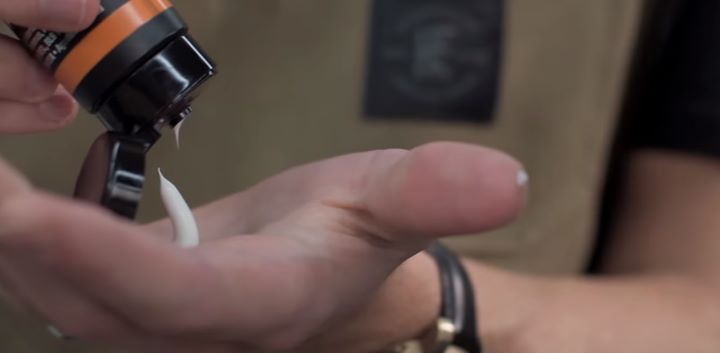
- Try a New Sunscreen on a Small Patch – If the skin turns red or itchy, stop using that product and pick a different formula before you cover your whole head.
- Apply Before You Go Out – It takes about 15 minutes for your skin to absorb sunscreen and protect you, and skin is unprotected until then.[1][2]
- Use Enough – The AAD says to use at least 1 teaspoon on the face, and most adults need about 1 ounce, roughly a shot glass, to cover all skin that clothing does not.[2] Your scalp, ears and neck take a share of that.
- Cover the Forgotten Spots – The FDA lists the ears, nose, back of the neck, the hairline and an exposed scalp as spots people miss.[1]
- Reapply – Reapply at least every two hours, and right after swimming or sweating.[1][2]
What to Look for in a Sunscreen for a Bald Head
- Broad Spectrum – The label should say broad spectrum, which means the product helps protect against both UVA and UVB rays.[1][3]
- SPF 30 or Higher – The AAD recommends SPF 30 or higher.[3] The FDA says SPF values up to 50 give greater sunburn protection.[1]
- Water Resistant – Look for a water resistant label that states 40 or 80 minutes. A label cannot claim a sunscreen is waterproof, and you still reapply on schedule.[1]
- Mineral or Chemical – Zinc oxide and titanium dioxide are among the active ingredients the FDA lists for sunscreens.[1] Mineral formulas often leave a visible white cast, which can also show you the spots you missed on a bald head.
- Tinted With Iron Oxide – The AAD notes that a tinted sunscreen with iron oxide also protects skin from visible light, which helps prevent dark spots.[2]
- Finish and Fragrance – A matte, non-greasy finish is easier to wear on a head that sweats, and a fragrance-free formula is a safer bet if your skin reacts to new products.
Other Ways to Protect Your Scalp
- Wear a Hat – A wide-brimmed hat covers the scalp, ears and neck, and the AAD lists it with long sleeves and sunglasses that block UV.[3]
- Watch the Clock – The sun is strongest between 10 a.m. and 2 p.m.; the AAD says to seek shade when your shadow is shorter than you are.[3]
- Take Care Near Water, Snow and Sand – These surfaces reflect the sun’s rays, which can raise the chance of sunburn.[3]
- Skip Tanning Beds – The AAD says UV light from the sun and tanning beds can cause skin cancer and wrinkling.[3]
How We Chose These Sunscreens
We research products using manufacturer information, ingredient lists, retailer listings and guidance from dermatology and health organizations. We do not test products in person. Read more in How We Research. We also checked that every pick is in stock on the web US. We looked at these factors:- SPF and Spectrum – Whether the product page gives an SPF of 30 or higher and says broad spectrum, in line with AAD guidance.
- Water Resistance – Whether the product page states a water resistant time of 40 or 80 minutes.
- Filter Type – Whether the sunscreen uses mineral filters such as zinc oxide or titanium dioxide.
- Feel and Finish – What the product page states about greasiness, white cast, fragrance and oil.
- Size – How much is in the container, since the AAD says most adults need about an ounce per application.
Frequently Asked Questions (FAQ) About Sunscreen for a Bald Head
- Is there a waterproof sunscreen? No. The FDA says no sunscreen is waterproof and all of them eventually wash off. A water resistant label must state whether it lasts 40 or 80 minutes in the water.[1]
- Should you wear sunscreen every day? The AAD says to put sunscreen on skin that clothing does not cover every day you are outside, because the sun gives off UV rays all year.[3]
Our Picks: Sunscreen for a Bald Head
Here are 6 sunscreens for a bald head. Each one is in stock on the web US. We hope you love the sunscreen we recommend! This does not change your price.1
Babo Botanicals® Clear Zinc Sunscreen SPF 30 Fragrance-Free Mineral Lotion


Currently unavailable
- The active ingredient is non-nano zinc oxide, and the label lists UVA and UVB protection.
- It is 80 minutes water and sweat resistant, so reapply at least every two hours.
- It is made for the face, lips, nose and ears, which covers the areas around a bald scalp.
- It is sold unscented and the maker aims it at sensitive skin.
2
Neutrogena® Sport Face Sunscreen Lotion SPF 70+ Sweat-Resistant Lotion


Currently unavailable
- It is broad spectrum and water resistant for up to 80 minutes, which suits a head that sweats.
- The formula is oil free, has vitamins C and E, and is made without oxybenzone or PABA.
- The lotion absorbs quickly and leaves a non-greasy finish.
- The FDA says SPF values up to 50 give greater sunburn protection, so the 70+ number is no reason to skip reapplying.[1]
3
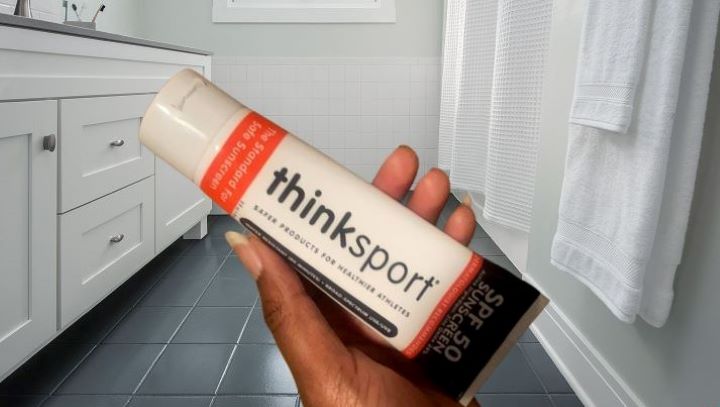
Think® Thinksport Mineral Sunscreen SPF 50+ Zinc Oxide Lotion


Currently unavailable
- Zinc oxide is the mineral filter, and the label lists broad-spectrum UVA and UVB protection.
- It is water resistant for 80 minutes and free of oxybenzone, avobenzone, parabens and phthalates.
- It was the first sunscreen to pass the Whole Foods Premium Care requirements, and it is vegan and Leaping Bunny certified.
- The lotion is made to absorb without an oily or sticky feel.
4
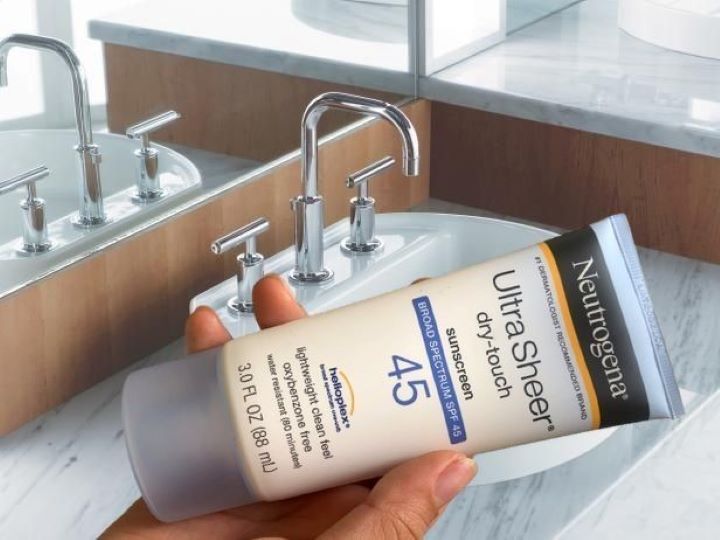
Neutrogena® Ultra Sheer Dry Touch SPF 45 Matte Sunscreen Lotion


Currently unavailable
- It is broad spectrum, water resistant for up to 80 minutes, and free of oil, oxybenzone and PABA.
- The finish is matte and non-greasy, which is a plus on a bare scalp.
- Helioplex is Neutrogena’s name for its stable UVA and UVB filter system, and the formula adds vitamin E.
- Each tube is travel size and TSA compliant, so one can live in the car or gym bag.
5
Waxhead Sun Defense Foods® Zinc Oxide Sunscreen SPF 35 Mineral Lotion for Face and Body


Currently unavailable
- The only active ingredient is 25% non-nano zinc oxide, and the lotion is water resistant for swimming and sweat.
- The texture is thick and leaves a light white cast, so you can see where you have covered.
- It is made without oxybenzone, octinoxate, parabens, phthalates and synthetic fragrance.
- The 4 ounce size works for the head, face and body.
6
CeraVe® Hydrating Mineral Sunscreen SPF 30 with Hyaluronic Acid


Currently unavailable
- Zinc oxide and titanium dioxide are the active ingredients, and the formula is free of oxybenzone and avobenzone.
- It also contains three ceramides, hyaluronic acid and niacinamide, and it is labeled oil free, fragrance free and non-comedogenic.
- Mineral sunscreens can leave a white cast, so rub it in thoroughly in thin layers.
- The 2.5 ounce tube is the smallest here, and it is eligible for FSA and HSA spending.
Index Table: Top-Rated Sunscreen for a Bald Head
| No. | Product | Image | Features | Brand |
|---|---|---|---|---|
| 1 | Babo Botanicals Clear Zinc Sunscreen - SPF 30 Fragrance-Free Mineral Lotion |  | Babo Botanicals | |
| 2 | Neutrogena Sport Face Sunscreen Lotion - SPF 70+ Sweat-Resistant Lotion |  | Neutrogena | |
| 3 | Think Thinksport Mineral Sunscreen - SPF 50+ Zinc Oxide Lotion |  | Think | |
| 4 | Neutrogena Ultra Sheer Dry Touch - SPF 45 Matte Sunscreen Lotion |  | Neutrogena | |
| 5 | Waxhead Sun Defense Foods Zinc Oxide Sunscreen - SPF 35 Mineral Lotion for Face and Body |  | Waxhead Sun Defense Foods | |
| 6 | CeraVe Hydrating Mineral Sunscreen - SPF 30 with Hyaluronic Acid |  | CeraVe |
Sources
- U.S. Food and Drug Administration (FDA). Sunscreen: How to Help Protect Your Skin from the Sun. Accessed October 26, 2026.
- American Academy of Dermatology (AAD). How to apply sunscreen. Accessed October 26, 2026.
- American Academy of Dermatology (AAD). Sunscreen FAQs. Accessed October 26, 2026.
Update History
- Oct 2026: Rewrote the article around FDA and AAD sunscreen guidance, removed the claims that sunscreen helps acne, rejuvenates skin cells or comes in waterproof form, replaced the application rules with cited steps, rewrote all six product notes, corrected the Babo Botanicals product (now the SPF 30 Clear Zinc lotion), removed the scoring list, added a Key Specs table and updated Sources (FDA, AAD)
- Mar 2022: Added Babo Botanicals Classic Oil Free Sunscreen and Neutrogena Sport Face Sunscreen Lotion SPF 70+
- Feb 2022: Added hands-on review photos
- Sep 2021: Added Thinksport SPF 50+ Mineral Sunscreen
- Jul 2021: Added Waxhead Sunscreen with Zinc Oxide and CeraVe Hydrating Mineral Sunscreen with Hyaluronic Acid
- Mar 2020: First published


